Students Want to Know How to Use AI. Are You Teaching Them?
As much as I’ve tried not to think about the start of the school year and to enjoy my summer fully, I love teaching and care too much about my students for thoughts not to creep in all the time.
Microsoft’s recent AI in Education Report found that 79% of students believe that knowing how to use AI effectively and responsibly is important for their future success. Yet, the Digital Education Council’s AI in Higher Education Global Survey showed that only 29% believe their instructors are equipped to guide them.
This is why I am working hard to stay on top of the rapidly changing AI landscape, the tools that are being created, and how best to integrate them into my courses. Students need to know what is out there, how they might use it, and then decide whether they want to.
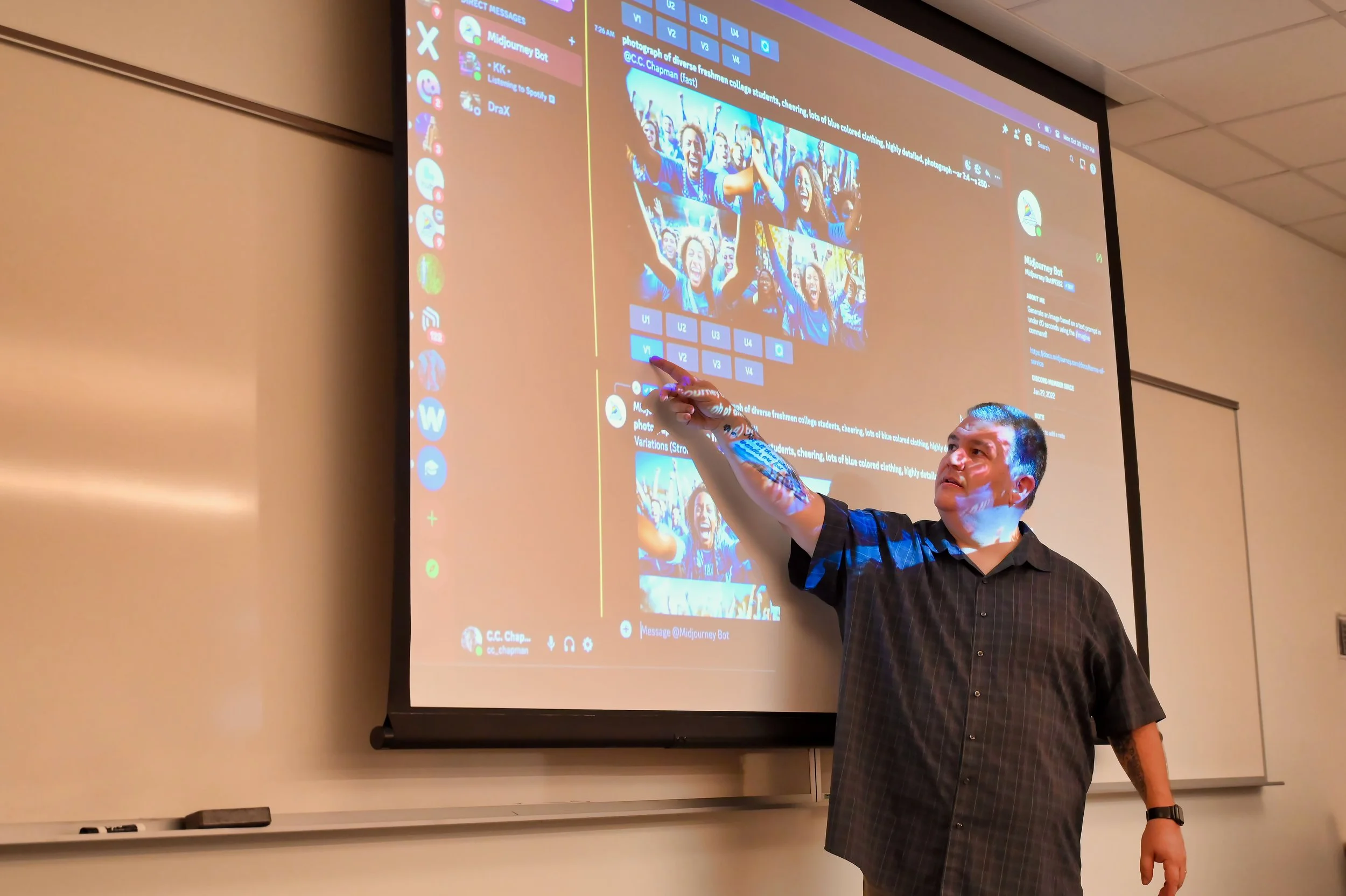
The photo above is from October 2023, when I was showing a class of first-year students how generative AI tools could create images. I wanted them to see what the tools could do, but also warn them about the need to be more critical of any image they saw because of these capabilities. It is wild to think about how much everything has changed in those three short years.
I have ethical, environmental, and security concerns about the rise of AI, and I believe educators need clear strategies to address these concerns responsibly. Whenever I talk about the tools, I also discuss these issues to help students develop a balanced understanding and ethical mindset.
I don’t believe that banning technology from the classroom or just ignoring it is the right answer. I said the same thing in the early days of the Internet, social media, and digital marketing. Yet, many said I was being silly and that they’d never matter to them.
If you are one of those people who feel that way about AI, I encourage you to read Co-intelligence: Living and Working with AI by Ethan Mollick. It is one of the more balanced and approachable books I’ve read on the topic, and there is a lot of good learning found within its pages. This can help you feel more confident and informed about AI.
Like him, I’ve always loved experimenting with emerging technology and now work to expose our students to these tools. To allow them to learn what they can and can’t do. To decide how we want to use them or choose not to. Finally, know the proper way for them to help without using them inappropriately.
Almost every student has used AI, as the reports above confirm. Yet, so many of them are never shown how to use the tools properly. We don’t just hand our nursing students needles, visual art majors chainsaws, or STEM students a full lab and walk away hoping they figure it out on their own, do we? Of course, we don’t.
My focus this fall will be first on teaching them how to brainstorm, ideate, and plan their businesses and marketing strategies. Then I’ll show them how AI tools can help them fine-tune or improve their work. They’ll never be required to use them, but it is my responsibility that they comprehend how their colleagues and future competitors might be using them.
I’m a business professor, and it would be wrong for me not to prepare my students as best I can for the world they’ll be working in. They are paying far too much money not to receive as much practical and useful learning as I can give them.